
Clock Tower
Before ‘survival horror’ was a phrase anyone would understand (that is to say, before Resident Evil), the console horror game landscape was pretty immature. There was Alone in the Dark, and there was Clock Tower.
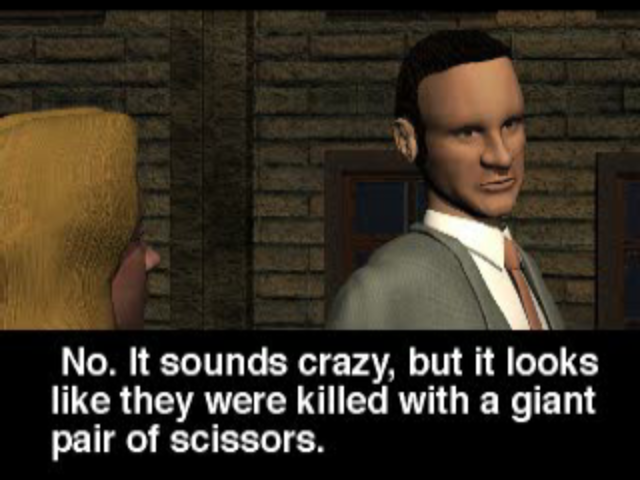 “No, no, stay with me here, I’m serious. This is a serious game.”
Once again we find ourselves up against the tricky task of working our way through the quirky rebranding of Japanese games for international plebians. Clock Tower for PlayStation is actually Clock Tower 2 in Japan, and the original entry was released for the Super Famicom a few years earlier. That game was also ported to the PlayStation, in Japan only, as Clock Tower: The First Fear in 1997. There was a third game in the series, which naturally was released internationally as Clock Tower II, but more on that later.
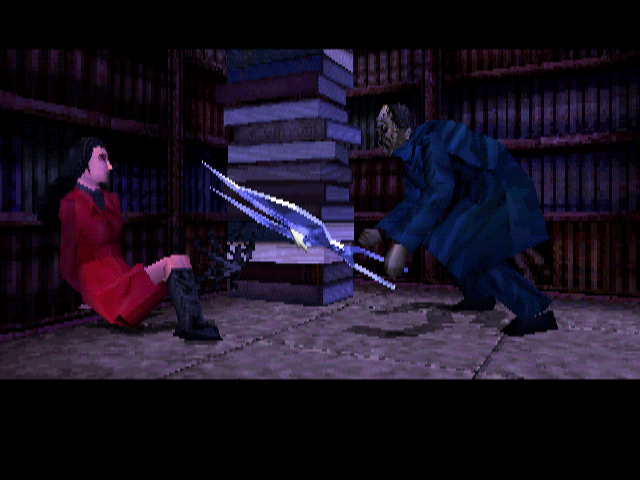 Are they really scissors or more shears?
Alhamdulillah, we finally, FINALLY have a point-and-click game that isn’t a nightmarish pixel hunt involving collecting pointless curios and using them in increasingly irrational ways to solve puzzles. While using the directional buttons to move the cursor around is still a chore, it has a ‘snap to’ function where if you move it near a point of interest, the cursor will jump to its location and stick in place for a moment, while also changing shape to indicate that the player can perform an action. Much easier.
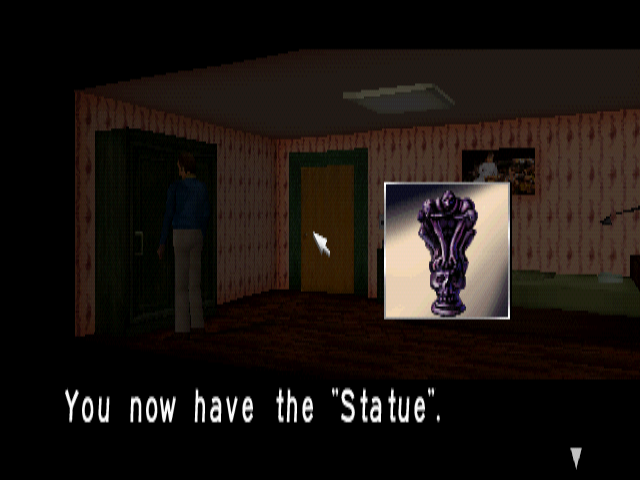 Rifling through cupboards and filling your pockets with trinkets is still the name of the game.
The concept of Clock Tower is quite unique. At its core it is a pretty simple haunted house simulator where you have to search rooms, pick up items, return to older rooms and work out a way to escape, but the key difference is that you are being constantly stalked by the morbidly ridiculous ‘Scissorman’ - a Leatherface-esque silent murderous pursuer who rather than cutting down his victims with a knife or chainsaw or something like that, instead commits ultraviolence with, er, a giant pair of scissors. It’s the most Japanese of stuff.
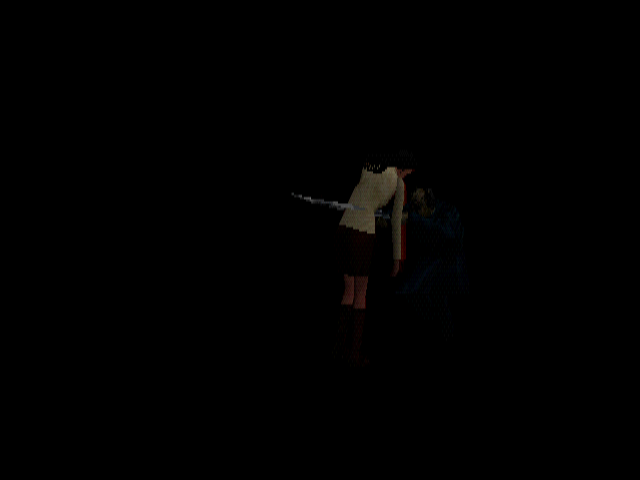 You sort of expect him to snip your head off to kill you, but it’s more of a poke with the pointy end.
There is no combat in Clock Tower. The stress and tension derive themselves from the fact that Scissorman could appear at anytime - he doesn’t actually chase you constantly like some sort of Indiana Jones comedy boulder - and that when he does, your only option is to drop whatever you were trying to do and run, which is a rather clunky manoeuvre in a point-and-click game. Unlike in Resident Evil, where simply leaving the room will suffice to get yourself a bit of peace and breathing room, Scissorman is more than happy to chase you from room to room, chopping at the air with his giant shears. It doesn’t sound particularly scary, but it is.
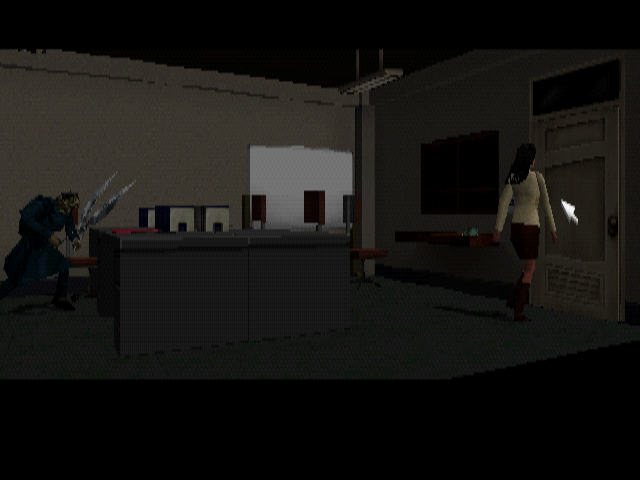 Once he appears, he won’t go away until you trigger an event which lets you shake him off.
At least, in a manner of speaking. Scissorman can only be temporarily removed from the immediate picture by either finding a hiding place (by rapidly clicking at bits of the environment in a panic) and watching a short scene where he pokes around and then gives up and slopes off, or by engaging in a bit of comedy slapstick to knock him out. This can be done through various stupid means, like hiding behind a cupboard and then whacking him over the head with a frying pan as if you were watching The Flintstones. Japan!
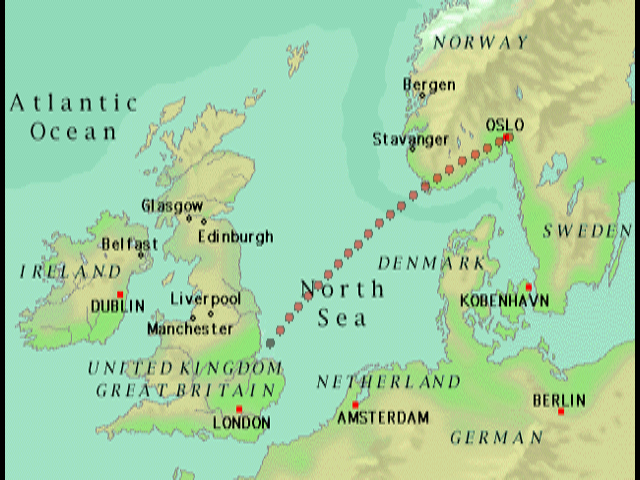 Idea for a blog: Bad Maps In Games. Here we have ‘German’ and a united Ireland. Berlin and Copenhagen are also slightly off.
The game isn’t particularly long - three levels - and the first two rather serve as tutorials for the final, long and complicated level. In between, you have a short ‘daytime’ level where you can visit various locations and catch up with characters. The plot is quite fluid, and depending on who you meet and what seemingly trivial decisions you make, the final level and ending can end up being rather different. The voice acting and translation is pretty ropey as you would expect from a Japanese game of this era. There is a whole other playthrough with a separate character available, but I don’t think it was that different and didn’t bother with it. It’s nothing particularly special overall, but after plumbing the depths of adventure games with Chronicles of the Sword I’ll take any improvement.
Kept my attention for: A few days
Did I finish it?: Yes
Overall: 6/10
Clock Tower II: The Struggle Within
In other words, Clock Tower III. But don’t call it that, because that’s actually a separate game on PS2. Just roll with it.
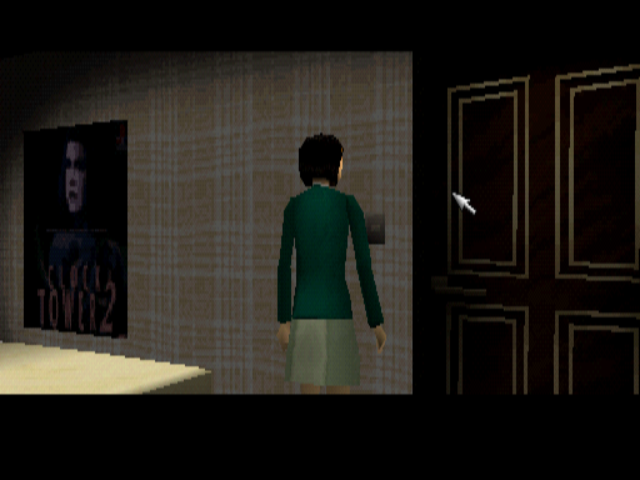 An advert for Clock Tower 2…in what is actually Clock Tower 3. Or is it? I think that’s the main character from the previous game.
Clock Tower II fails because it falls for one of the classic blunders. Never get involved in a land war in Asia It took a concept that worked in its own, rather specific way, adds in some extra mechanics that nobody asked for and don’t particularly add very much, and then took the things that did work and through lack of lucid thinking make them all just a slight bit worse.
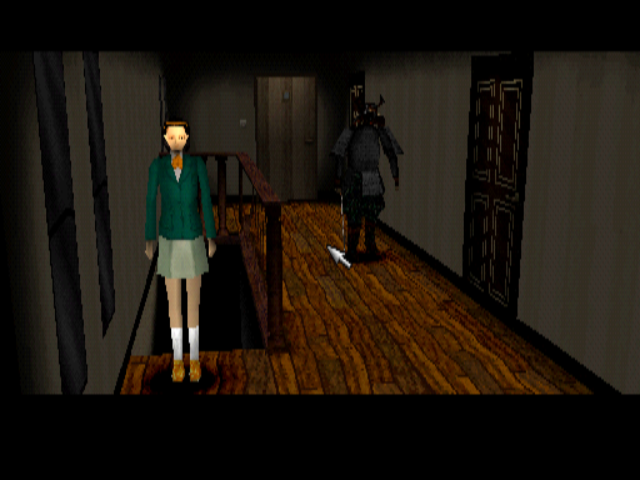 Animated Suit Of Armour Guy doesn’t follow you between rooms, unlike Scissorman.
I didn’t get very far with Clock Tower II, but my time with it was cut short mainly because of this. The core gameplay itself is the same sort of point-and-click-and-run-away fare, but the main change is the inclusion of some sort of Jekyll & Hyde alter-ego mechanic which lets you fight back against the enemies occasionally (But why?). You’re also no longer chased by Scissorman - instead you are stalked by various stock horror ‘characters’, like cursed dolls and the like. Scissorman was the USP of Clock Tower. What’s the thinking behind this?
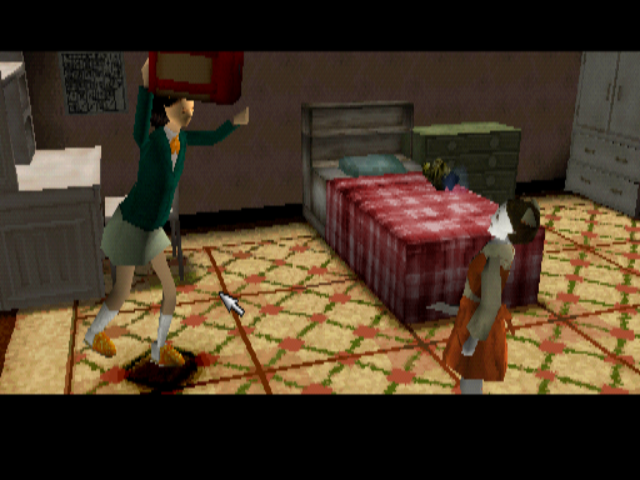 The slapstick bonking-on-head events are still here, though.
At the same time, a lot of the things that made Clock Tower work are just not as fun now. Stuff as simple as the lack of creepy echoing footstep sounds mean the game is a silent affair save for scripted scream sound effects and whatever. The environments are too cramped and it’s easy to click the wrong thing. Areas are blocked off inexplicably until you perform some action elsewhere and trigger some sort of hidden flag, after which point you find that a door might suddenly become interactable for no reason. It’s this aggregate of minimal losses that just make it a pretty poor game. Maybe I’m just mad that we lost Scissorman.
Kept my attention for: A day
Did I finish it?: No
Overall: 3/10
Codename - Tenka
In Europe (Psygnosis being a British developer, rest in peace), this game was actually called Lifeforce Tenka and so I should really be leaving this game until later, but here we are. God knows why the name changed to Codename in the US.
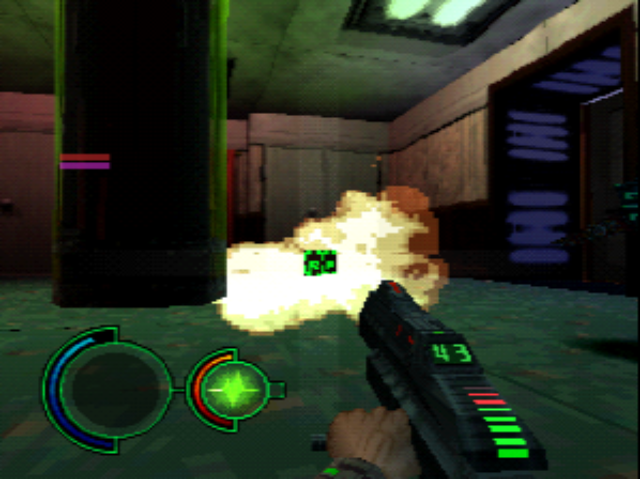 Your remaining ammo appearing on the gun model itself is pretty cool, I guess.
Tenka was actually one of the very first games I played on the PlayStation, as a demo of the game came on a disc called Demo One that was bundled with the PlayStation itself. One feels that was probably how most people familiar with this game got to know it. You can see why Sony wanted it in their promotional material - for 1997, it looks pretty good. 3D First-person shooters were still a bit of a new thing and there was no Half Life or Call of Duty to clone, and Doom was old by now.
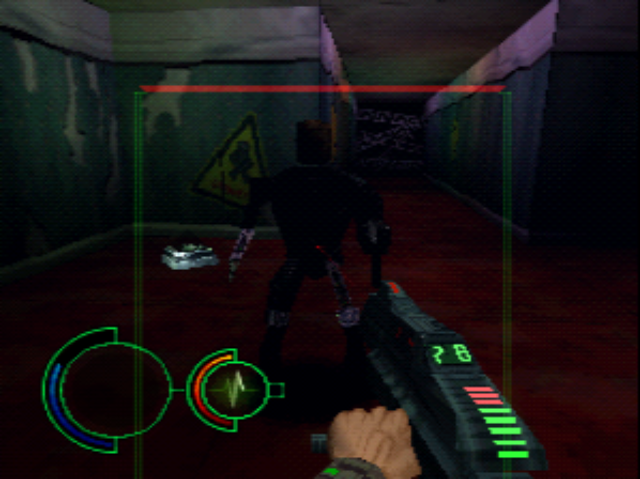 Codename Tenka shatters all FPS cliches by including a human-robot android enemy.
Unfortunately, outside of one or two (and it really is one or two) exceptions, PS1 FPS games were all a bit lacking. Analog controls hadn’t been figured out and the machine itself didn’t have enough juice to do it properly. You can see all the tricks in Tenka; narrow and winding corridors mean you never need to see (ie. render) more than a few feet in front of you, and dark lighting masks the dull textures. The gun looks cool but not much else does.
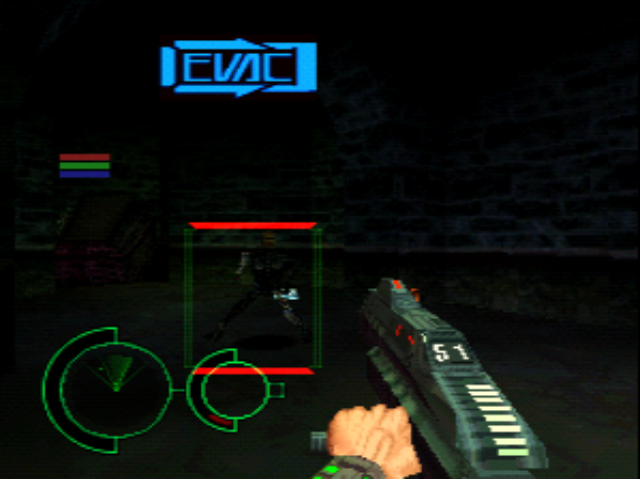 It’s just this forever. There was nothing interesting to take screenshots of.
It’s all very by-the-numbers, too. You can basically call every change-up the game is going to throw at you well before it happens. Start a new level - “They’ll probably introduce a new enemy”. Never turn a corner or enter a room without finding another few of the same enemy you’ve been shooting at for the past ten minutes. Pick up the pink key to open the pink door. Boring, man.
Kept my attention for: An hour
Did I finish it?: No
Overall: 3/10
Colin McRae Rally
Rallying games have always sat in their own niche within the racing genre, but in 1998 they were rather more of the ‘arcade racer clone with rally cars in them’ style than anything attempting to be a proper simulation. The tone had been set a few years earlier with Sega Rally Championship, a game with about as much in common with actual rallying as Duke Nukem has with police armed response teams. On the PlayStation there was only V-Rally, which was just a PlayStation version of Sega Rally. So there was a gap for a proper swing at a rally sim.
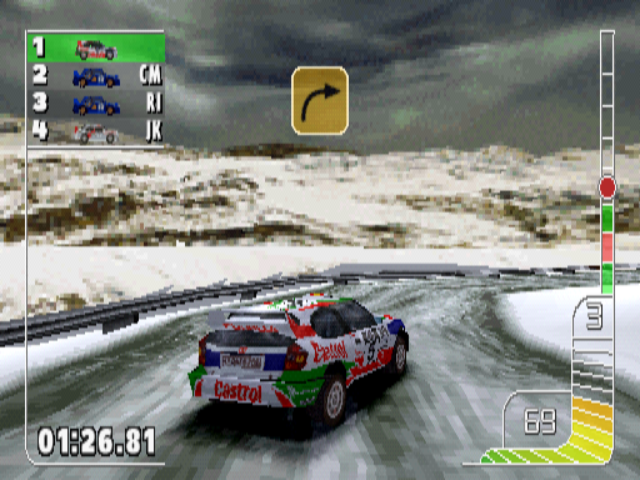 Snowy stages require spiked tires.
Well, we got it. Colin McRae is so well put together that it’s one of the very few games (maybe the only one) so far that, low-res graphics aside, could pass for a modern game in terms of simulation and control. The world has since moved on from directional buttons and digital stop/go X button usage to do the racing, but it manages to achieve quite a lot with it. There are a shedload of tracks. Sometimes the co-driver is annoyingly slow with the instructions, leaving you cannonballing out of a square corner into a hedgerow because you didn’t get a chance to brake, but the fact there is a serious co-driver element to the game would have been a new experience in 1998.
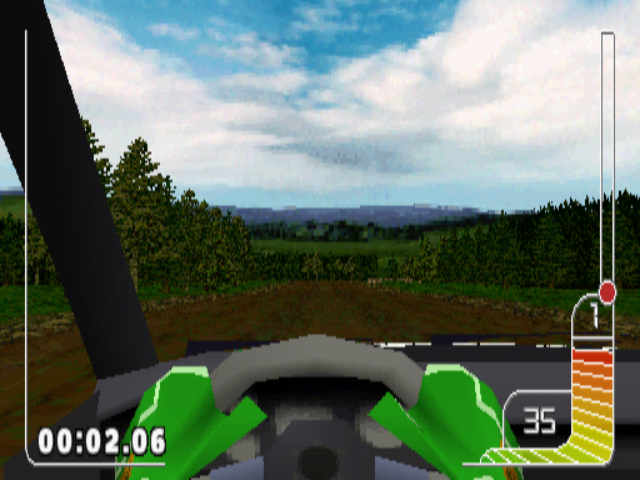 The in-car view even (shoddily) renders the hands, and animates the gear shifts.
You’d enjoy the experience of the aforementioned vehicular carnage anyway, as it was one of the first games on PlayStation outside of the likes of Destruction Derby and Twisted Metal (where smashing up your car was the whole point) to include halfway realistic damage modelling on your whip. It’s nothing special, but it’s indeed there nonetheless, and damage to your car has a knock-on effect on its handling and engine quality, which gives you something to think about when you get a little bit of time to sellotape things back together between rally stages. This provides the player with an incentive to try not to bash their car into a telegraph pole early on or use cheap videogame tricks like ‘bumping’ your car around corners at speed. Take out your front headlights on a night stage and it’s more or less game over.
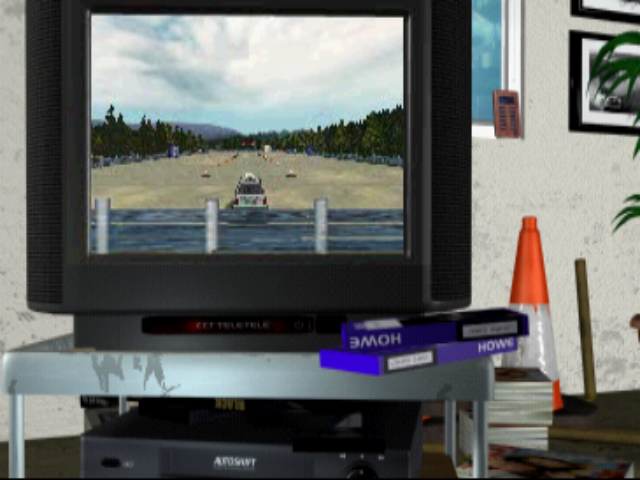 Rally school has your classic school days ‘CRT TV on a trolley’ scene, complete with VHS tapes.
There’s a fun ‘rally school’ mode where McRae himself instructs you in a broad scotch twang on the basics of rallying, in a bit of a low-rent take on Gran Turismo’s licencing system. Who knew that driving around cones over and over could actually be quite challenging to get right. Other than that, there’s your usual single race and time trial modes. Fun game. You can get a fair amount of mileage out of it. Sorry.
Kept my attention for: A few days
Did I finish it?: No
Overall: 7/10
Colin McRae Rally 2.0
The sequel came out a couple of years later, practically vibrating with the feeling of confidence developers might get after scoring a slam dunk with their previous entry. Colin McRae Rally 2 is at its core the same game - which is good - but it feels clear that much effort has been made to squeeze as much more ‘game’ into the game as they could, now that there was some hype. Some of it lands, some seems a bit indulgent.
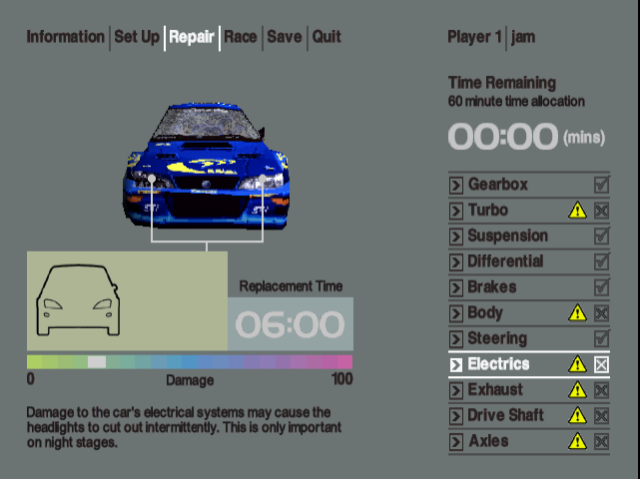 The damage modelling is better now.
The biggest difference in gameplay between the two games is in the car handling. I thought they had things pretty close to spot on in the original, though it wasn’t at quite Dirt Rally (which is what Colin McRae ended up turning into) levels of accuracy yet. In CMR 2, it’s quite different, and in a bad way. Cars handle like shopping trolleys full of bricks, brusquely shoved onto an ice rink. Simple curves in the road turn into a minigame of understeering and oversteering as your car wiggles all over the road. Is this realism? I don’t think it is, but maybe some people were conned into thinking so in 2000. Add rain into the mix and it starts to get a bit daft as your multi-ton high performance vehicle more resembles an air hockey puck, floating over the ground and making plink sounds as it bounces from tree to tree.
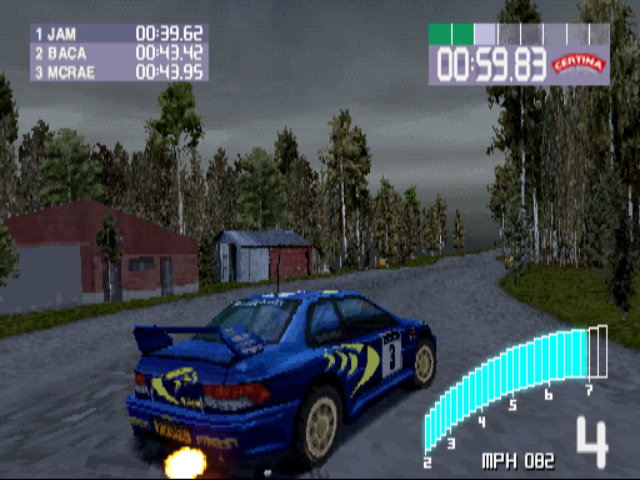 Swinging your car around on a more or less straight road is frequent.
You eventually get used to it, but I was wishing we could have had the original physics. It’s a shame really, as most other new ‘things’ in CMR 2 are welcome additions. Codemasters obviously caved to publisher pressure to get a V-Rally style multi-car ‘race’ mode in there, which is snortily labeled ‘Arcade’ and bins realism in favour of an electronic soundtrack and the usual trimmings of a typical racing game. It’s fun, though, and I expect many players will have primarily played the game in this mode, even if the frame rate gets a bit ropey with the presence of all the extra vehicles to be rendered.
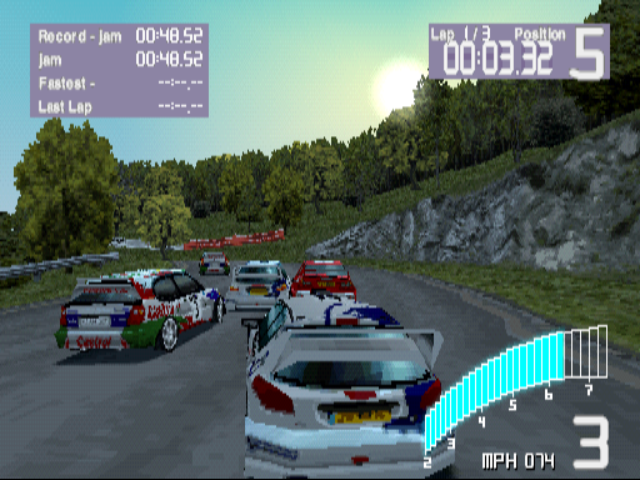 Arcade mode includes other cars, but the graphics are pretty rough.
They got rid of the Rally School, though, which is a black armband moment. While CRM 2 is packed with a lot more ‘stuff’ and has quite a cool, Y2K art direction, I feel like it’s a lot of background noise compared to the more understated and discerning original. Not really much less fun to play, though.
Kept my attention for: A day or so
Did I finish it?: No
Overall: 7/10